News
News
Anti-ageing in the field
EU InnCoCells project finds plant extracts for effective skin care
In an EU cooperation project, 17 partners from eleven European countries have identified 25 plant extracts that show great potential for skin care products with anti-ageing and anti-inflammatory effects. The plant ingredients are considered a milestone in cosmetic ingredient research, according to the conclusion of the multi-year project. It was funded by the EU with €7.9 million and coordinated by the Finnish VTT Technical Research Centre. Partners included universities, research institutes and several companies and industry organisations. "The results show how nature and science can work together to develop the next generation of cosmetic ingredients," said Kirsi-Marja Oksman-Caldentey, InnCoCells coordinator at VTT.
With grass, pepper and basil
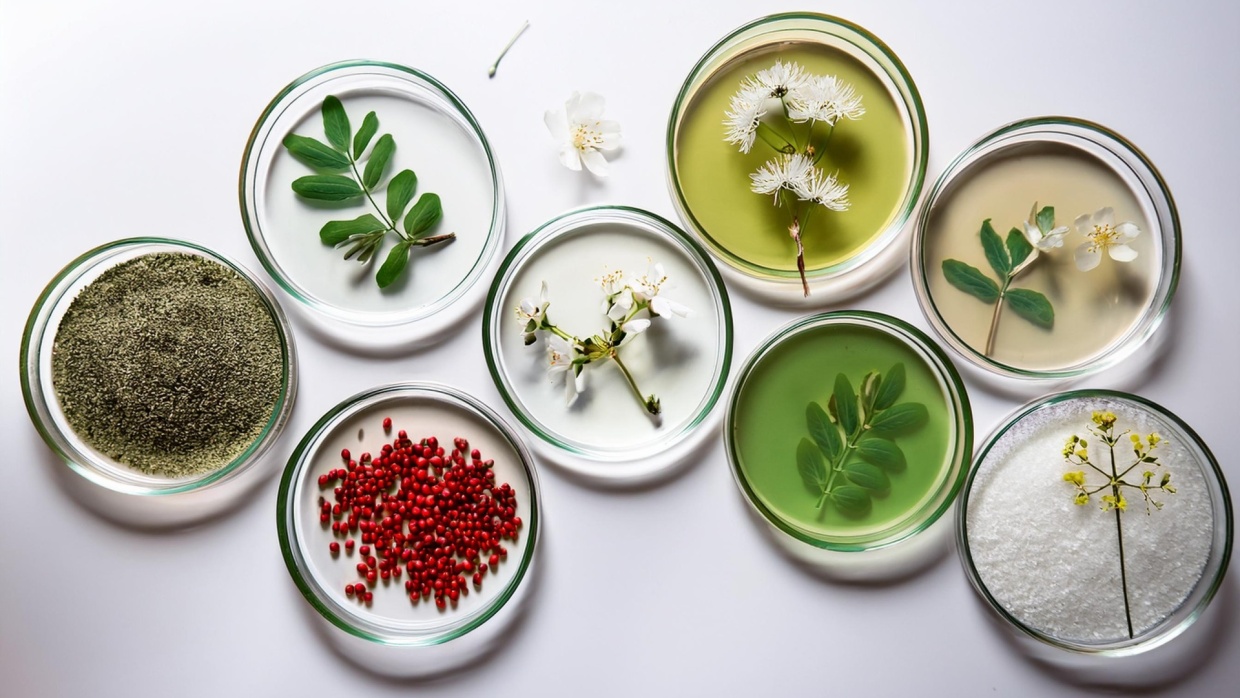
Among the most notable discoveries are Danish Skorbus grass, tropical pepper (Capsicum chinense) and basil hair root extracts. Danish Skorbus grass has exceptional anti-inflammatory, anti-ageing and antimicrobial properties that surpass those of known individual components. The pepper extracts also showed strong anti-ageing effects, protected skin cells from stress and exhibited antimicrobial activity. The basil hair root extracts showed anti-collagenase and anti-hyaluronidase activities, which offer the potential to combat skin ageing and support hydration. The most promising plant extracts and natural products will now be tested on volunteers. In addition, the project partners want to cooperate with industry and develop business models to bring the extracts to market.
With aviation and upcycling technologies
InnCoCells was launched in 2021 to develop innovative plant production processes for commercial use using a collaborative screening approach. The research is considered one of the most comprehensive scientific studies of plant-based cosmetic ingredients. More than 100 plant extracts were tested for their effects on 20 skin-related biomarkers. To do this, the consortium used plant sciences, biotechnology and cultivation methods such as greenhouse, aviation and plant cell culture technologies. Circular approaches such as the upcycling of agricultural by-products were also integrated to ensure environmental sustainability. A key factor was that the extracts could be produced sustainably using plant cells and tissue cultures in bioreactors, in cultivation or through the use of agricultural by-products, it said.
Source: InnCoCells